
Here is the Gemini AI translation of Ayelet Hashachar commentary to Genesis 19:37 by Rabbi Aharon Leib Shteinman
Genesis 19 Verse 37. He is the father of Moab unto this day.
It requires examination what it comes to say [by] “unto this day.” And perhaps, since we hold established in Kiddushin (67b) that among the nations one follows after the male, there could have been a reality where only daughters were born from them, and then this nation would not be Moabites since they married members of another nation. And [thus] it comes to teach us that he is the father of Moab unto this day (and even though the main practical distinction in “following after the male” is after their conversion). And see Ibn Ezra.
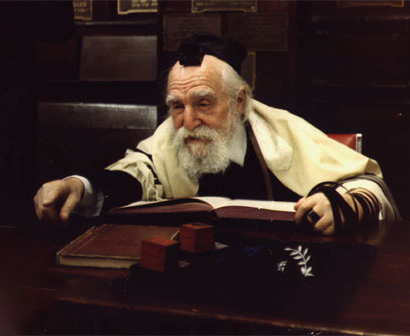
And in the introduction to Igros Moshe (Part 8), it is brought that HaGaon Rabbi Moshe Feinstein, of righteous memory, related that when he was in Lyuban, one of the householders fell ill and took to his bed with a strange kind of illness, and his tongue swelled in his mouth, etc. According to him, a week prior, on the Sabbath of Parshas Vayeira, he had raised a difficulty: How did the daughters of Lot merit that the Messiah should descend from them, even though they were not ashamed of the disgraceful act [Giliuy Arayot / incest] they committed and publicized that their children were from their father, and he spoke about them in a degrading manner?
That night, two very old women appeared in his dream with their heads and faces covered, and said they were the daughters of Lot. They added and said to him that they heard his claim and came from the World of Truth to answer him. They claimed that they could have said that since they were from the family of Abraham and were saved by a miracle from Sodom, people would not have attributed an act of physical relations [Znut] to them. They could have attributed any miraculous act to themselves, such that they could have said they conceived from the Divine Presence, as it were, and established a new religion—Christianity. Instead, they called their sons Ammon and Moab to publicize that when a woman conceives, the offspring always has a father of flesh and blood. In this merit, they merited that the true Messiah would emerge from them.
They also said he committed a great sin when he spoke about them in a degrading manner, and since he spoke of them with disparagement, he would be punished measure for measure like the Spies. Our Rabbi [Rav Moshe Feinstein] saw this as a true matter, since the explanation seemed true to him (and indeed, from where did the daughters of Lot arrive at such feelings? Were they influenced by Abraham?).
And behold, Rashi wrote: “This one [the elder] who was not modest publicized that he was from her father.” And this implies that she was claimed [punished] for the publicizing that it was from her father.
And behold, that which Rashi wrote—that the younger one called him in a clean language and received a reward in the days of Moses, as it is said, “Do not distress them at all,” whereas with Moab he did not warn except that he should not wage war with them but allowed him to distress them—his intention is not that her offspring are punished for what she called by this name, but rather that the younger one received a reward for her modesty, and the elder one lacked the merit to receive a reward.
Editor’s comment: To answer a certain objection I will quote from the Soncino translation of Talmud, Nazir 23a
Rabbah b. Bar Hana, quoting R. Johanan, said:16 The verse, For the ways of the Lord are right, and the just do walk in them,’ but transgressors do stumble therein,17 may be illustrated by the following example. Two men roast their paschal lambs.18 One eats it with the intention of fulfilling the precept19 and the other eats it with the inten tion of having an ordinary meal. To the one who eats it to fulfil the precept [applies]. ‘And the just do walk in them,’ but to the one who eats it to have an ordinary meal [applies], ‘but transgressors do stumble therein’. Resh Lakish remarked to him: Do you call such a man wicked? Granted that he has not fulfilled the precept in the best possible manner, he has at least carried out the passover rite. Rather should it be illustrated by two men, each of whom had his wife and his sister staying with him. One chances upon his wife and the other chances upon his sister. To the one who chances upon his wife [applies], ‘And the just do walk in them’, and to the one who chances upon his sister [applies], ‘but transgressors do stumble therein’.
But are the cases comparable? We speak [in the verse] of one path, whereas here [in the example given] there are two paths.20 Rather is it illustrated by Lot when his two daughters were with him.21 To these [the daughters], whose intention it was to do right,22 [applies], ‘the just do walk in them’, whereas to him [Lot] whose intention it was to commit the transgression [applies], ‘but transgressors do stumble therein’.