
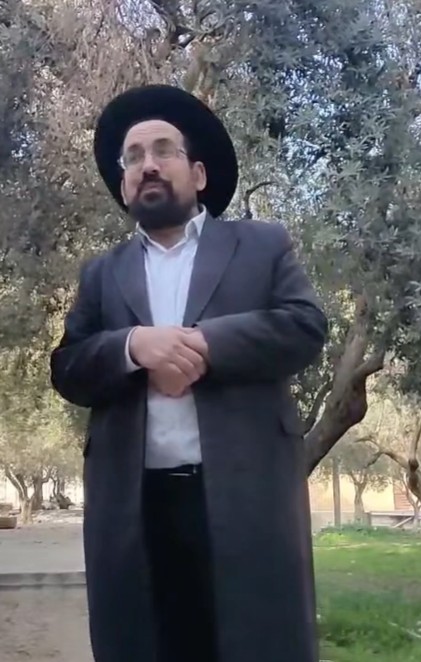
📖 Executive Summary
In this teaching, Rabbi Eliyahu Weber discusses the profound spiritual significance of Tu B’Av (15th of Av) and Yom Kippur as outlined in the Mishnah (Taanit 4:8) and the Talmud.
Key Themes
1. Connection Between Tu B’Av and Yom Kippur
- Yom Kippur: Represents the giving of the second Tablets (Luchot), symbolizing a covenant or “marriage contract” (Ketubah) between G-d and Israel.
- Tu B’Av: Commemorates several historical reconciliations and structural shifts in Jewish history that restored divine and communal connection.
2. The Historical Reasons for Tu B’Av
- End of the Desert Generation: The decree of death for the generation that left Egypt ceased on Tu B’Av, allowing Divine communication (Dibbur) to return to Moses face-to-face.
- Tribal Intermarriage Permitted: The prohibition against marrying across tribes to preserve ancestral land inheritances was lifted.
- Re-admitting Benjamin: The tribe of Benjamin was welcomed back into the congregation following the tragic Civil War (Pilesh B’Giv’ah).
- Removal of Roadblocks: Hoshea ben Elah (the last king of Northern Israel) dismantled the guards set up centuries prior by Jeroboam I (Yarov’am ben Nevat) to prevent Northern Israelites from making pilgrimage to the Temple in Jerusalem.
3. The Spiritual Paradox of Hoshea ben Elah
Despite Hoshea ben Elah’s righteous act of removing the roadblocks, the Northern Kingdom was conquered and exiled by Shalmaneser V during his reign.
When the legal barriers were removed, the people’s failure to ascend to Jerusalem became a choice of personal apathy rather than political coercion. This moral indifference shifted responsibility directly onto the populace, triggering the exile.
In the second half of the lecture, Rabbi Eliyahu Weber contrasts historical periods (under Ottoman, British, Mamluk, Byzantine, Crusader, and Jordanian rule) when Jews were physically prevented from accessing the Temple Mount with the era after 1967 (5727). He notes the claim that if the entire nation had flocked to the site following its liberation, full sacrificial worship might have already been restored. However, he concludes on an encouraging note, pointing out that people are increasingly returning to the site, expressing hope that this growing presence will eventually lead to the rebuilding of the Temple and the renewal of Temple service.

Full Transcript
As it is written in the Talmud, there are six reasons why we celebrate on Tu B’Av, but each day we should focus on one reason so we won’t dwell on everything all at once. I will focus on one central point; I will mention all the reasons for Tu B’Av and then focus on the main topic.
— Mishnah Taanit 4:8
So it is a day designated for finding matches (spouses). I once heard a literal explanation for why this occurred on the 15th of Av and Yom Kippur: because the grape harvest in the vineyards typically begins around Tu B’Av and finishes around Yom Kippur. But nonetheless, they chose these two specific dates—a Hebrew date doesn’t always align precisely with the harvest day—so there is likely a special reason, which the Talmud asks about.
The Talmud says: “Granted, Yom Kippur is understandable as a joyous day—it is a day of forgiveness and pardon, a day on which the second Tablets were given.”
How does the giving of the Tablets relate to this joy? Throughout the year there are many joyous dates, so perhaps various dates would have been suitable for this ceremony. Rather, the reasons for this day must be connected to connection/bonding, like the union of a husband and wife. The Mishnah concludes: “‘On the day of His wedding and on the day of His heart’s joy’—this refers to the Giving of the Torah,” and Yom Kippur, when the second Tablets were given, is like a marriage contract (Ketubah) between us and the Holy One, Blessed be He.
That is Yom Kippur. What about the 15th of Av? The Talmud answers: The day on which the deaths of the wilderness generation ceased—the first reason. But if the reason is that the deaths in the wilderness ceased, how is that connected to matches?
Therefore, the Talmud states: Divine speech returned to Moses. On that day, speech returned to Moses, creating a bond of love—“Face to face I speak with him.” Between Moses and G-d, there is a connection between the Divine Presence (the Beloved) and the Nation of Israel (the Bride).
And the second reason: The tribes were permitted to intermarry with one another—which is certainly related. And the tribe of Benjamin was permitted to re-enter the congregation.
The Talmud brings an additional reason: The day on which Hoshea ben Elah abolished the guards/roadblocks that Jeroboam ben Nebat placed on the roads. For over 200 years, any Jew from the Kingdom of Israel who wanted to reach Jerusalem for pilgrimage was unable to. Hoshea ben Elah arrived and removed those roadblocks.
The Jerusalem Talmud asks: If this was the best possible generation, why did Shalmaneser, King of Assyria, attack and conquer during his reign? Because he removed the blame from himself and placed it onto the people. Previously, the people said: “We can’t go; the government doesn’t allow it.” But when the barriers were removed, they shrugged: “I’m not interested.” Therefore, responsibility fell directly upon the people.
Part 2: Applying the Lesson to Today
- For centuries (under the Turks, British, Mamluks, Byzantines, Crusaders, and Jordanians), Jews were physically barred from accessing the Temple Mount.
- In 1967 (5727), the door to the Temple Mount was reopened. If the entire nation had returned then, sacrificial service might already be restored.
- The Hope: People are steadily returning. Small beginnings lead to great growth. May we merit seeing the Temple rebuilt and service restored speedily in our days.