
English Summary: Asara B’Tevet – From Ancient Siege to Modern Redemption
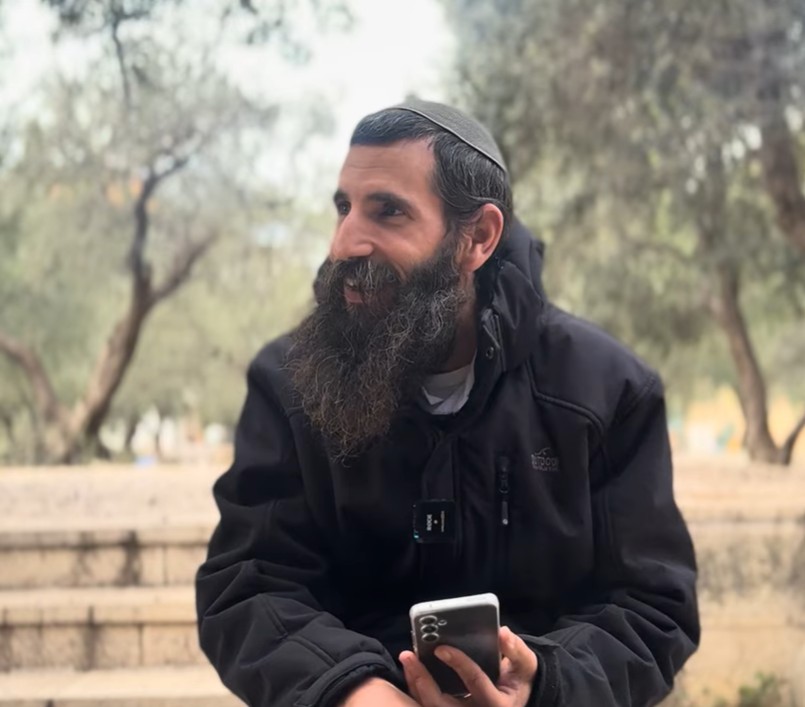
The video transcript of Rabbi Wolfson’s talk offers a profound re-reading of the Fast of the 10th of Tevet (Asara B’Tevet), shifting the focus from historical mourning to the urgent spiritual opportunities of the present day.
-
Gratitude for the Rebirth of Jerusalem:
The speaker begins with a powerful expression of gratitude to God. While the 10th of Tevet marks the beginning of the Babylonian siege on Jerusalem, the speaker notes the “immense kindness” of our current era. Jerusalem is no longer under siege; its streets are filled with the elderly and children, and the city has expanded so rapidly that “there is no longer room for a wall.” This physical expansion is seen as a sign of the unfolding redemption and the return of the Jewish people to their inheritance.
-
The “Day of Judgment” for the Temple:
A central theme of the talk is based on the teachings of the Chatam Sofer. He explains that Asara B’Tevet is unique because it marks the day when the Heavenly Court sits in judgment each year. They determine whether the Temple will be rebuilt in the coming year or, God forbid, remain in ruins. Therefore, the fast is not just about a tragedy that happened 2,500 years ago; it is a “preventative fast” (like a Ta’anit Chalom) meant to avert a decree in the present. It is the day the “spiritual blueprints” for the coming year are decided.
-
Overcoming the “Habit of Exile”:
The speaker addresses a psychological barrier: after 2,000 years, the Jewish people have become “accustomed” to living without a Temple. He quotes Rebbe Nachman and Rebbe Nathan of Breslov, warning against being satisfied with “as if” (K’ilu)—the idea that spiritual study alone is a total substitute for the physical Temple. While our ancestors who returned from Babylon could not imagine life without the Sanctuary, modern generations have lost that “natural simplicity.” The challenge today is to awaken a genuine, physical longing for the Temple’s restoration.
-
The Mission of National Unity (The “Elkanah” Method):
A significant portion of the talk is dedicated to how the Temple should be rebuilt. The speaker emphasizes that it must not be the project of a few “fringe” groups, but a movement that unites all of Israel. He cites the biblical figure Elkanah, who would travel different routes each year to the Tabernacle to inspire others. Elkanah didn’t use intellectual arguments or polemics; he spoke from a “crying heart” until the eyes of his listeners filled with tears. The speaker calls for this same approach—reaching out to all Jews, including those who currently view the Temple as a “crazy idea,” to connect them to their own souls and the sanctity of the Land.
-
Active Participation and Hope:
The speaker concludes by praising those who take active steps—whether by visiting the Temple Mount (in accordance with Halakha), studying the laws of the Temple, or even working on practical elements like the Red Heifer. He expresses a high level of optimism, suggesting that the building of the “Great and Holy House” may be much closer than we imagine. The ultimate goal is to move from a state of “two kingdoms” (division) to being “one in God’s hand,” witnessing the manifestation of the Divine Presence in a rebuilt Jerusalem.