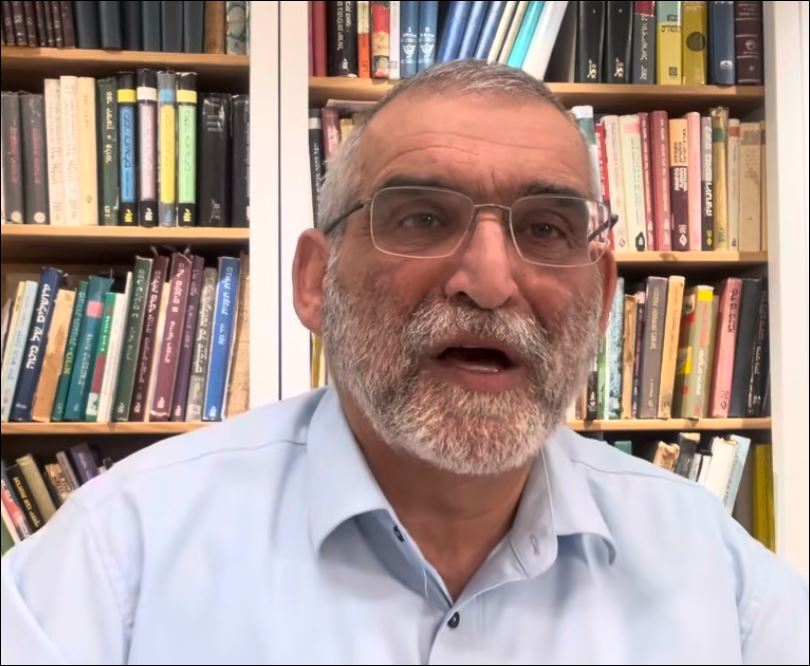
Dr. Michael Ben Ari – A Touch of the Parsha | Parshat Balak – Balak and Balaam Facing the Heroes of the Hills, “And from the hills I behold him.” (A Torah Insight from the Year 5784 / 2024)
An English Summary of Dr. Ben Ari’s Words on Parshat Balak and the Connection to the Hilltop Youth
1The Uniqueness of Parshat Balak and Modern Relevance
A Departure from the Core Narrative: Ben Ari notes that since Parshat Lech Lecha, the Torah focuses almost exclusively on the Nation of Israel. Parshat Balak is a rare exception—for three whole chapters, the Torah’s “camera” shifts to Moab, focusing on two non-Jewish figures: Balak (King of Moab) and Bilaam (the sorcerer from Aram).
Contemporary Parallel : Ben Ari draws a direct line between the biblical narrative and recent events—specifically, the media narrative surrounding “settler violence” used to justify the administrative detention of Jewish residents.
2 The Sorcerer as a Modern Media Consultant
Unconventional Warfare: Terrified by Israel’s decisive victory over Sihon the Amorite, Moab realizes they cannot defeat Israel through conventional military means. They resort to psychological warfare by hiring Bilaam to curse Israel.
Redefining the “Curse“: Ben Ari explains that in modern terms, Bilaam the sorcerer was essentially an ancient media consultant and narrative engineer. His power lay not in cartoonish magic, but in his ability to shape public perception, delegitimize the enemy, and identify psychological vulnerabilities to make the opponent “light” or insignificant (the Hebrew root for curse, K-L-L, means to make light/empty).
Historical Precedent (The Exodus Ship): He references how, prior to Israel’s founding, the British expelled the Holocaust refugees aboard the Exodus right in front of the UN’s UNSCOP committee. This shocking visual deeply moved public opinion, ultimately securing the votes for the Partition Plan. Shaping perception creates reality.
The Danger of Words: Atrocities (such as those committed by the Nazis) never begin with gas chambers or physical actions; they always begin with words, incitement, and speeches—precisely like Bilaam’s rhetoric.
3The Framing of “Settler Violence” and Administrative Detentions
Manufacturing Consent: Ben Ari argues that the media and the defense establishment are currently fabricating a hyper-inflated narrative of “settler violence.”
Ignoring the Victims: He protests how the media sweeps under the rug the recent murders of four Jews (including three young men and a 60-year-old family man), while ignoring the daily reality of stoning, shootings, and ambushes faced by Jewish residents.
Justifying Draconian Measures: In his view, the relentless media focus on “settler violence” is designed to manufacture public legitimacy for administrative detentions of Jews. This allows the state to snatch youth from their homes and jail them without trial, judge, or visible evidence, using the Shin Bet’s “secret files” to mask politically motivated persecution born of media shaming.
4 Bilaam’s Flawed Character and the Dialogue with the Donkey
A Corrupted Personality: According to Pirkei Avot, Bilaam possessed an “evil eye, a swollen soul (greed), and a haughty spirit.” He was a deeply egoistic, money-driven cynic who chose to see only the bad in everything.
Utter Ingratitude: Ben Ari analyzes Bilaam’s interaction with his donkey. Bilaam repeatedly beats the animal when it halts before the angel. When the donkey miraculously speaks, asking: “Am I not your donkey on which you have ridden all your life until this day…?”, Bilaam’s true face is exposed. He is a man who sees only himself; the moment his personal objectives are stalled, he is willing to destroy even those who have served him loyally for years.
5 Israel’s Secret Strength and Bilaam’s Trap
The Vulnerability G-d Shielded: When Bilaam attempts to curse Israel, G-d forces him to speak only the truth. In his blessings (“How goodly are your tents, O Jacob”), Bilaam identifies that Israel’s strength lies in its distinctiveness and moral isolation (“A people that dwells alone, not reckoned among the nations“), and in its strict adherence to family sanctity, modesty, and privacy (the doors of their tents did not face one another).
The Destructive Counsel (The Sin of Shittim & Baal Peor): Realizing he cannot curse them from the outside, Bilaam deduces that Israel can only be defeated if they destroy their own moral shield. He advises Balak to entice the Israelite men with the daughters of Moab and lead them into the cult of Baal Peor—a worship rooted in total lawlessness, the erasure of boundaries, and the destruction of the family unit. Once Israel’s moral walls crumbled, the nation collapsed from within via a plague.
Conclusion and Message to the “Hilltop Heroes“
Encouragement to the Pioneers: Ben Ari concludes with a passionate message to the pioneering youth and residents of Judea and Samaria: Do not be deterred by media shaming or administrative detentions. He compares them to Jacob the Patriarch, who endured the scorching heat of the day and the freezing frost of the night to protect his flock and the homeland against a predatory enemy. He calls them the true “anchors of Zionism” who safeguard the land of the ancestors, asserting that through their bravery, the redemption of Zion will be realized.
For those who wish to support the Hilltop Heroes in an active way, Press Here.