
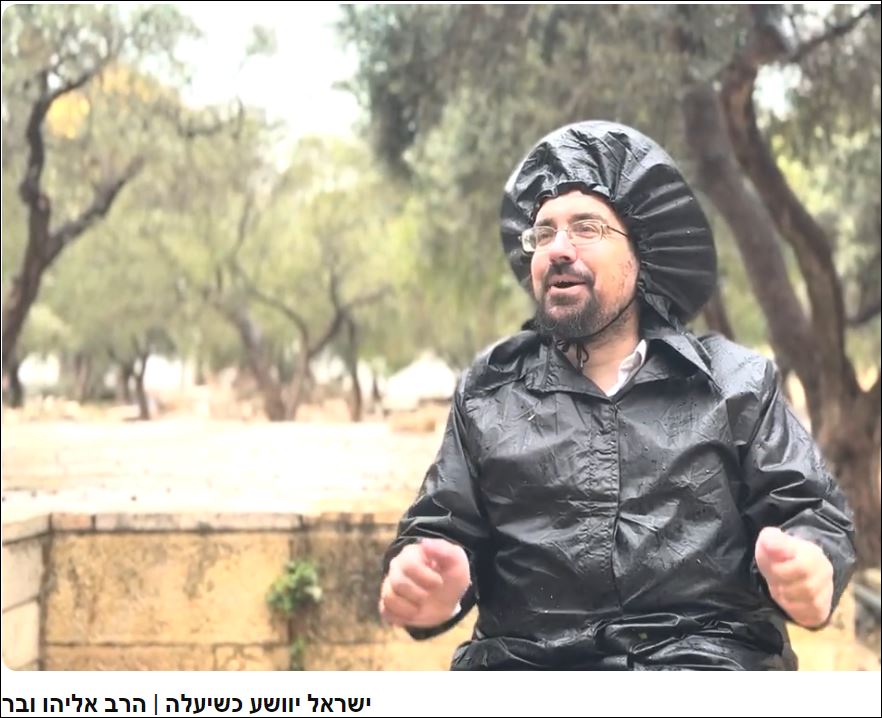
Here is a detailed GEMINI AI summary of the talk given by Rabbi Eliyahu Weber on the Temple Mount regarding the connection between the Passover sacrifice and the conduct required on the Temple Mount.
English Summary: From Haste to Stability
- The Contrast of the “Traveler”
Rabbi Weber points out a fascinating linguistic and conceptual parallel between the laws of the Passover sacrifice in Egypt and the laws of entering the Temple Mount (Har HaBayit).
- The Exodus: In Egypt, the Torah commands the Jews to eat the sacrifice in “haste” (Chipazon), with their loins girded, shoes on their feet, and staffs in their hands—ready to leave for the desert.
- The Temple Mount: The Mishnah (Tractate Berachot) lists these same items but in the negative: one may not enter the Temple Mount with a staff, shoes, or a money belt (Pundato).
- Coming Home vs. Passing Through
The Rabbi explains that the difference lies in the destination. The Exodus was about the faith to leave into the wilderness; therefore, they dressed as travelers. However, the Temple Mount is “Home.” One does not enter their own home or the house of God looking like a weary traveler or a passerby. Entering the Temple Mount represents a state of belonging and permanence, which is why the “traveling gear” must be removed.
- “Not in Haste”
The core of the talk focuses on the transition from the “Haste” of Egypt to the “Stability” of the Redemption. Citing Isaiah, the Rabbi notes that the final redemption will not be in haste (Lo BeChipazon).
- While the Exodus from Egypt was a sudden, hurried escape from slavery, the return to the Temple Mount is a gradual, step-by-step process of “coming home.”
- The Gradual Ascent
Rabbi Weber applies this to the current reality on the Temple Mount. He describes the progress seen in recent years—starting with whispered prayers, moving to louder prayers, then to prostration (Hishtachavuyot), and recently to singing and dancing.
- The Message: Although we want everything immediately (the Altar, the Daily Offering, the Red Heifer), God leads us through a process. We must appreciate every “half-step” and every small increase in holiness, understanding that a lasting building is built slowly and deliberately, not in a panicked rush.
Editor’s Note: For those that read Hebrew, see the article at https://60ribo.org.il/bowing/ where Rabbi Dov Lior mentions a reason not to prostrate on the stone pavement of the Temple Mount.