
For the sake of ease I will quote from the Jerusalem Bible translation (published by Koren) of the Second Book of Kings chapter 17
In the ninth year of Hoshea, the king of Ashshur took Shomeron, and carried Yisra᾽el away into Ashshur, and placed them in Ḥalaĥ and in Ḥavor by the river of Gozan, and in the cities of the Maday.
For so it was, when the children of Yisra᾽el had sinned against the Lord their God, who had brought them up out of the land of Miżrayim, from under the hand of Par῾o king of Miżrayim, and had feared other gods,
and walked in the statutes of the nations, whom the Lord cast out from before the children of Yisra᾽el, and of the kings of Yisra᾽el, which they practised;
and the children of Yisra᾽el fabricated matters that were not right against the Lord their God, and they built them high places in all their cities, from the tower of the watchmen to the fortified city;
and they set them up pillars and asherim on every high hill, and under every green tree; and there they burnt incense in all the high places, as did the heathen whom the Lord carried away before them; and did wicked things to provoke the Lord to anger; for they served idols, concerning which the Lord had said to them, You shall not do this thing;
then the Lord testified against Yisra᾽el, and against Yehuda, by all the prophets, and by all the seers, saying, Turn from your evil ways, and keep my commandments and my statutes, according to all the Tora which I commanded your fathers, and which I sent to you by my servants the prophets.
Yet they would not hear, but hardened their necks, like the neck of their fathers, that did not believe in the Lord their God.
And they rejected his statutes, and his covenant that he made with their fathers, and his testimonies which he testified against them; and they followed worthless paths, and became themselves worthless, and went after the nations that were round about them, concerning whom the Lord had charged them, that they should not do like them.
And they left all the commandments of the Lord their God, and made them molten images, two calves, and made an ashera, and worshipped all the host of heaven, and served the Ba῾al.
And they caused their sons and their daughters to pass through the fire, and used divination and enchantments, and gave themselves up to do evil in the sight of the Lord, to provoke him to anger.
Therefore the Lord was very angry with Yisra᾽el, and removed them out of his sight: there was none left but the tribe of Yehuda alone.
Also Yehuda did not keep the commandments of the Lord their God, but walked in the statutes of Yisra᾽el which they practised.
And the Lord rejected all the seed of Yisra᾽el, and afflicted them, and delivered them into the hand of spoilers, until he had cast them out from his face.
For he rent Yisra᾽el from the house of David; and they made Yorov῾am the son of Nevat king: and Yorov῾am drove Yisra᾽el from following the Lord, and made them sin a great sin.
For the children of Yisra᾽el walked in all the sins of Yorov῾am which he did; they departed not from them;
until the Lord removed Yisra᾽el out of his sight, as he had said by all his servants the prophets. So was Yisra᾽el carried away out of their own land to Ashshur to this day.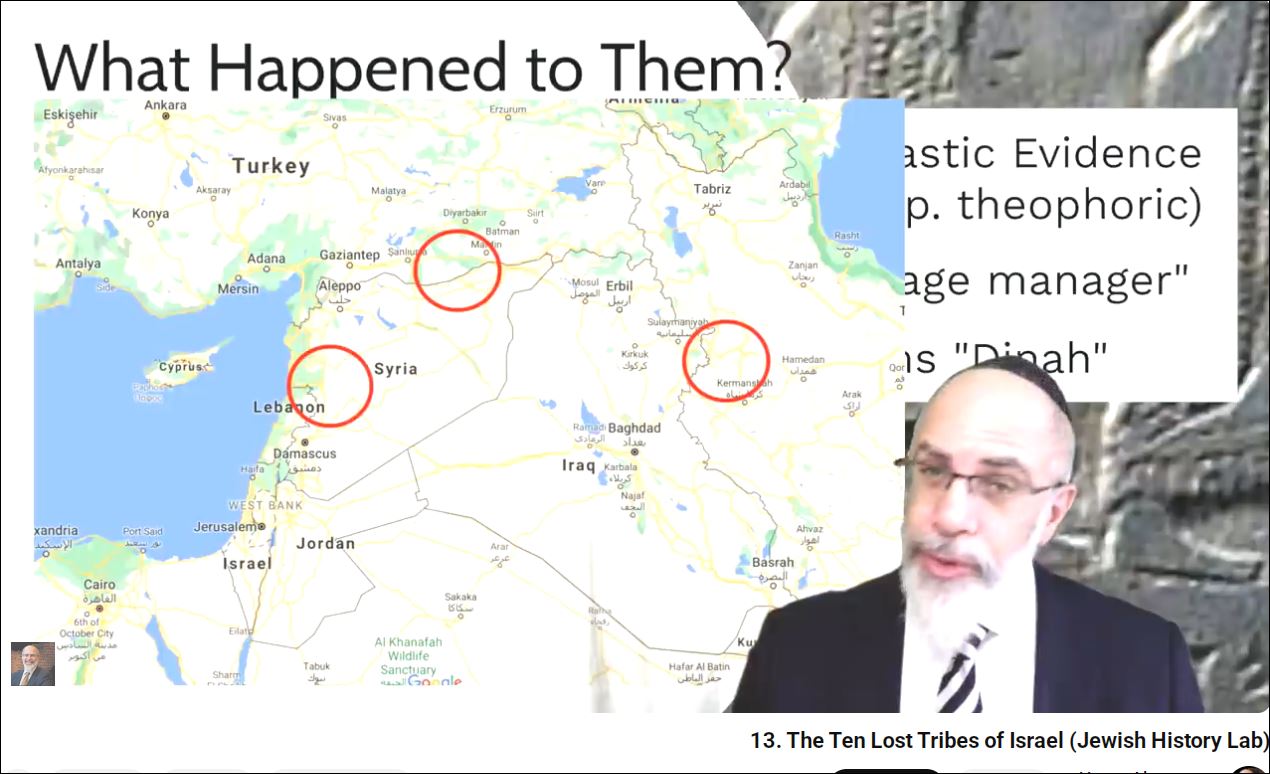
Historian Dr. Henry Abramson identifies the main regions that the Ten Tribes were sent and genetic Y-chromosome tests seem to indicate that even today there are some people in those regions that share a similar Y-chromosome DNA to Jewish populations.
I asked Gemini AI to make a map of where the Ten Tribes were exiled to according to the Talmud in the Iraq- Iran area based on the DafYomi Adavance forum:
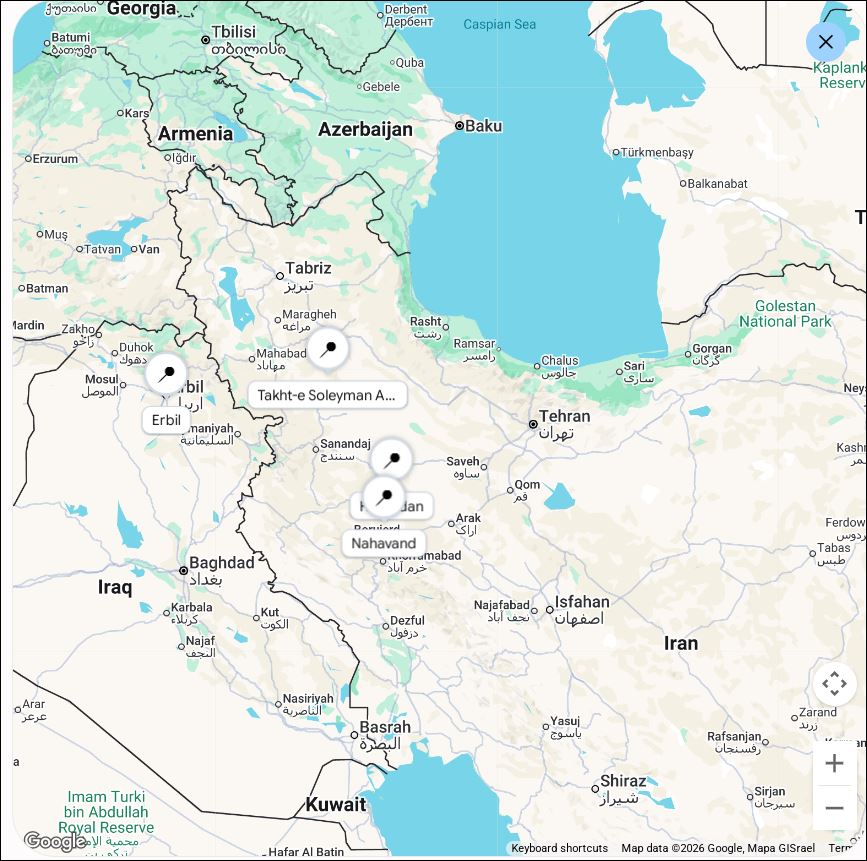
The Talmudic Background on the Status of the Lost Tribes
The Talmud in tractate Yevamot 16b and 17a discusses the status of the Ten Tribes.
For the sake of ease, I will use the translation and commentary, I found at https://www.sefaria.org.il/Yevamot.16b.10?lang=bi&with=all&lang2=en
Everything quoted from there I colored dark blue:
Rav Yehuda said that Rav Asi said: With regard to a gentile who betrothed a Jewish woman nowadays, we are concerned that the betrothal might be valid, despite the fact that a betrothal of a gentile is meaningless, lest he be from the ten tribes of Israel who intermingled with the gentiles. The Gemara raises an objection: But there is an important principle in halakha that any item separated, i.e., not fixed in its place, is presumed to have been separated from the majority. In this case, it can be assumed that any individual singled out from the gentiles belongs to the majority of gentiles and has no Jewish roots at all.
The Gemara responds: Rav Yehuda means that there is a concern only with regard to those who came from the permanent dwelling places of the ten tribes…
In the end 2 reasons are provided to explain, why we would not give “Israelite status” to someone who lives in the permanent dwelling places of the ten tribes if he or she performed a marriage ceremony with a Jew. The following is the 2nd explanation provided by the Gemara/Talmud.
There are those who say that Rav Yehuda actually related the following: When I said this halakha before Shmuel, he said to me: They did not move from there, (the place where they deliberated on this matter), until they rendered all of them, including those who intermingled with the ten tribes in different locations, full-fledged gentiles. Consequently, there is no concern that their betrothals might be of any effect, as it is stated: “They have dealt treacherously against the Lord, for they have begotten strange children” (Hosea 5:7).
Ruling of Rama (Rabbi Moshe Isserles) on the subject
Rama (Rabbi Moshe Isserles) in his responsa #62 holds that Jewish Law is in accordance with the 2nd view mentioned in the name of Shmuel. Namely, based on the verse of (Hosea/Hoshea 5:7) the ten tribes have lost their Israelite status.
Rama ends off by quoting a dispute between Rabbi Akiva and Rabbi Eliezer (See Sanhedrin 110b). Rabbi Akiva holds that the ten tribes will not return in the future. Rabbi Eliezer contends that just as the day darkens and then becomes light again, so the ten tribes, even their state of darkness in the future will brighten for them and for all of Israel, Amen.
On the assumption that most of the original Ten Tribers did not leave their places of exile to other regions, which at least was true at the time that the Talmud was written it turns out that most of the biological descendants of the Ten Tribes live in Islamic lands in our times.
Those Rabbis who wish to clear Islam of the sin of Idolatry are providing a tremendous stumbling block to the biological descendants of the Ten Tribes from returning to Hashem and hold back the fulfillment of a prophecy. Namely, what is stated in the last verse of Yishayahu chapter 27: And it shall come to pass on that day, that a great shofar shall be blown, and they shall come who were lost in the land of Ashshur, and the outcasts in the land of Miżrayim, and shall worship the Lord in the holy mountain at Yerushalayim.
Why Classify Islam as Idolatry?
Ritva: Coercion to Join the Yishmaelite Religion is Coercion for Idolatry
Let it be known that the faith of Yishmaelites, even though they are Monotheists, it is considered to be complete Foreign Worship (Idolatry) to be killed and not convert, for one that admits to their faith, denies the Torah of Moshe, that it is not true as it exists in our hands and all that is similar to this is Foreign Worship (Idolatry).
See the insights of Ritva to tractate Pesachim 25b.
Radbaz Was Presented with a Similar Dilemma and Issued A Similar Ruling
And I exerted myself and found that the Ritva of Blessed Memory wrote in accordance to my words, and I quote:
Let it be known that the faith of Yishmaelites, even though they are Monotheists, it is considered to be complete Foreign Worship (Idolatry) to be killed and not convert, for one that admits to their faith, denies the Torah of Moshe, that it is not true as it exists in our hands and all that is similar to this is Foreign Worship (Idolatry).
Radbaz, then quotes that there are two types of coercion to violate the Sabbath on the penalty of death. One type of coercion does not demand sacrificing one’s life for Sabbath. However, there is a type of coercion that will be interpreted that the Jew is admitting that the Torah is not true and that the Holy One Blessed be He did not command the observance of Shabbat. That type of coercion does require self-sacrifice.
(from Questions and Answers of Radbaz Vol. 4 Response 92 (1163)
Tosafot: Those That Designate the Wrong Day of the Week as Their Sabbath Day Are Not Testifying about the Truth of the Holy One Blessed be He and Those that Deny the Uniqueness of Israel Are Not Testifying about the Truth of the Holy One Blessed be He
Who is like your nation Israel, one people on the Earth – We say in the midrash, three things testify this one for that, Israel and Shabbat and the Holy One Blessed be He; Israel and the Holy One Blessed be He, testify regarding Shabbat, that it is the day of rest; and Israel and Shabbat testify regarding the Holy One Blessed be He that he is one; the Holy One Blessed be He and Shabbat testify regarding Israel that they are unique among the nations; and upon this do we rely to say, “you are one” in the Mincha prayer of Shabbat, even though it does not speak (directly) on the matter of the day, Shabbat in contrast to the Arvit and Shacharit prayers.
Tosafot Chagiga 3b
What Other Big Halachic Authorities Rule In Accordance to Ritva and Radbaz to Resist Forced Conversion to the Yishmaelite Religion with the Highest Level of Sacrifice
The Chafetz Chaim author of the Mishna Brura and other important halachic works, who often has final say on Halacha (at least for Ashkenazim) wrote a book called Nidchei Yisrael. In chapter 19 of Nidchei Yisrael, he sides with the opinion of Ritva and Radbaz brought earlier in this article.
Rabbi Yekutiel Halbershtam in his work Divrei Yatziv, Section Yoreh Deah, chapter 40 also rules in accordance to Radbaz (and Ritva). Among the points Rabbi Halberstam says in the name of Radbaz: one who is being forced to leave the entire Jewish religion and to be like one of the nations of the Earth and to deny all the Torah of Moshe, all the more so, he should be killed and not transgress; this and furthermore, that the person (being coerced into Islam) has to admit that there was a man by them whose stature was greater than the stature of Moshe Rabbeinu, peace be unto him and this is a destruction of the entire Jewish religion.
Rabbi Dov Lior who served as the Chief Rabbi of Hebron and Kiryat Arba in a letter stating his opposition to the average Jew participating in Muslim Iftar parties cited Ritva’s opinion quoted earlier, as part of his justification for his halachic ruling.
Didn’t Rabbi Yosef Karo Rule that Muslims are not guilty of Idolatry?
The following is an excerpt from the post:
Muslim Idolatry Trees – Do They Interfere With Davening Mincha on the Temple Mount?
Whoever Doesn’t Want to Hide His Eyes From Reality Will Discover That Some Muslims Offer Incense to a Demon.
The following is Pew research results of what the Muslims say about themselves.
Overall, Muslims in Central Asia and across Southern and Eastern Europe (Russia and the Balkans) are least likely to say that jinn {demons} are real. In Central Asia, Turkey is the only country where a majority (63%) of Muslims believe in jinn {demons}. Elsewhere in Central Asia, about a fifth or fewer Muslims accept the existence of jinn. In Southern and Eastern Europe, fewer than four-in-ten in any country surveyed believe in these supernatural beings.
In general, Muslims who pray several times a day are more likely to believe in jinn {demons}. For example, in Russia, 62% of those who pray more than once a day say that jinn {demons} exist, compared with 24% of those who pray less often. A similar gap also appears in Lebanon (+25 percentage points), Malaysia (+24) and Afghanistan (+21).
The survey also asked if respondents had ever seen jinn {demons}. In 21 of the 23 countries where the question was asked, fewer than one-in-ten report having seen jinn {demons}, while the proportion is 12% in Bangladesh and 10% in Lebanon.
It is important to note that while belief in jinn {demons} is widespread, relatively few Muslims in the countries surveyed believe it is an acceptable part of Islamic tradition to make offerings to jinn {demons}. As discussed in Chapter 6, Bangladesh is the only country surveyed in which more than a fifth of Muslims (28%) say appeals to jinn are acceptable. In 18 of the countries, no more than one-in-ten say this is an acceptable practice.
According to reports on the internet offering incense of such things as frankincense and similar materials is part of the gift offerings they give to the demons.
And so I found on the internet a report of Muslims of offering incense to demons at the web site:
https://www.youtube.com/watch?v=r7waqNdtOF4&ab_channel=WildFilmsIndia
 Incense to Demons
 Incense to Demons
And so too another video complains of Muslim religious figures that are involved in mysticism that practice all types of magic with demons
https://www.youtube.com/watch?v=_PWawUcQYvQ&ab_channel=IslamicGuidance
I also found a written article on Muslims who offer a type of incense to demons and bring them other gifts and request from them, all types of requests.
https://www.wionews.com/south-asia/residence-of-jinns-where-muslims-and-hindus-come-together-to-pray-17283
Muslim Demon Worship Idolatry
One Who Offers Incense to a Demon – Insights of “the Ran” to Tractate Sanhedrin 61b
Introduction
A Jew should be willing to sacrifice his life rather than worship Idolatry. But what if he makes the wrong choice and does not sacrifice his life? The Talmud says the punishment for those that serve Idolatry out of love and fear is less severe than someone who does not have this excuse. Most commentaries understand that love and fear, means love of a person or fear of a person. Rambam however has a different understanding of love and fear which “the Ran” criticizes.
“And Rambam of blessed memory in chapter 3 (of the Mishna Torah) on the Laws which discuss Idolatry, defines, “out of love”, such as, he desires an image because its service is very attractive – or when one serves it out of his fear of it – i.e., he fears that it will harm him – as the [idol] worshipers imagine that it provides benefit and harm but did not accept it upon himself as a Deity, he is exempt”.
The Ran disagrees with the definition of serving “out of love and fear” offered by the Rambam and brings as proof the ruling of the Gemara, that someone who offers incense to a demon is considered to have served Idolatry.
Now the normal case of someone who offers incense to a demon is that he does not accept it as a Deity but nevertheless incense worship to demons is classified as Idolatry.
“The Ran” concludes that anyone who does an act of worship to any form {or image} in order to derive from it some benefit, behold he has in essence given it, Deity status and dominion in that matter and therefore the one that serves it is doing an act of Idolatry.

The Ruling of the Shulchan Aruch, Yoreh Deah, Chapter 179 Halacha 19
He who offers incense to a demon to bring it and to compel it to do his will, he is liable on account of serving Idolatry (see Tur and Beit Yosef commentary for background on this ruling).
For a defense of Rabbi Karo’s Shulchan Aruch ruling, see footnote IV in the Hebrew article
הסרת המסגדים בהר הבית על ידי ממשלת ישראל
Clarification: Normally, I would not rebuke scoffers. In this particular case, I thought doing so would benefit the Jewish people.
Other Muslims are guilty of:
- Tree Idolatry
- Deification of their (false) prophet
- Pantheism
- Moon Worship
- Intermediary Worship
- Belief in Multiple Deities (Alawite Muslims, who got a stamp of approval from the Nazi Mufti of Jerusalem)
In theory if you go according to the Rabbi Yosef Karo viewpoint and you encounter a Muslim, who is not guilty of Demon Worship, Tree Idolatry, Pantheism, Moon Worship, Intermediary Worship, and Multiple Deities and observes all the other Noahide commandments is he on solid ground with Hashem?
 No! According to Rabbi Moshe Feinstein, Hashem will punish this person with premature death for believing in false prophet M.
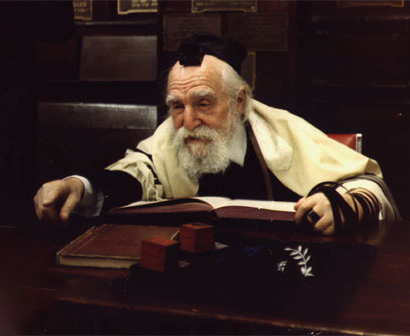 No! According to Rabbi Moshe Feinstein, Hashem will punish this person with premature death for believing in false prophet M.
Question: What Happens if the Muslim has some special merit based on other deeds, will this cancel his premature death decree?
Answer: I don’t know.